
Cheech and Chong Bud Farm
LDRLY GamesSimulation
4.713.50K Reviews
- Version
- 1.10.4
- Installs
- 1.00M
- Age Rating
- Mature 17+
Screenshots
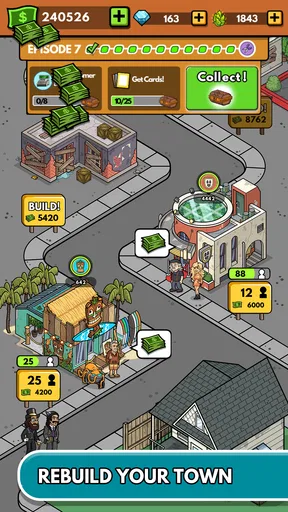





Our Review of Cheech and Chong Bud Farm
 Analysis by Appyee
Cheech and Chong Bud Farm is the kind of mobile simulation game I open when I want progress without having to give it my full attention. It puts me in charge of a cannabis-themed business and turns the usual management loop into something deliberately relaxed, silly, and easy to check in on. The central appeal is simple: build up production, collect rewards, improve the operation, and let the business keep moving while I am away.
That sounds straightforward, and it is, but the personality matters here. This is not a serious business simulator with spreadsheets, strict deadlines, or complicated economic forecasting. It is a lighthearted idle game built around the Cheech and Chong setting, with a mature tone and humor that will either make the experience more enjoyable or become tiring fairly quickly. I found it best when treated as a short-session game rather than a title that deserves constant attention.
Developed by LDRLY Games, the game is free to start and sits in the simulation category. It has reached over a million installs and holds a 4.7 average from roughly 114 thousand ratings, which gives a useful indication of its broad appeal. The mature 17+ rating is important, though: despite the cartoon presentation, this is not a game I would hand to a child or recommend to anyone looking for a family-friendly management experience.
How the current game feels to play
The basic rhythm is built around checking the operation, collecting what has accumulated, and deciding where the next improvement should go. That loop is immediately understandable. I never felt lost during the early stages, because the game gives me a clear sense of what needs attention and why an upgrade matters. The satisfaction comes from seeing a modest setup gradually become a more productive operation.
Its idle structure is particularly convenient for people who play in fragments. A typical session might begin while I am waiting for coffee, continue for a few minutes during a break, and end after I have collected earnings and started the next round of progress. I do not need a long uninterrupted sitting to feel that I have accomplished something. That makes it a better fit for a phone than many traditional simulation games that expect careful planning every time they are opened.
The trade-off is that the game can feel repetitive if I expect constant novelty. The main pleasure is not discovering a completely different activity every few minutes. It is optimizing a familiar cycle and watching numbers and production move forward. Players who enjoy incremental progress will probably understand the appeal quickly. Players who need frequent story developments, direct control, or dramatic changes in objectives may find the routine too narrow.
I also appreciate that the theme gives the ordinary idle formula a recognizable identity. Without the Cheech and Chong connection, the structure could feel like another generic production game. The characters and comic tone help distinguish it, although they also make the experience less neutral than a standard farm, restaurant, or city simulator. The humor is part of the package rather than a small decoration around the mechanics.
What progression asks from the player
The most useful way to approach progression is to think in cycles instead of isolated purchases. When I return to the game, I first gather the available output, then look at which improvement will make the next waiting period more worthwhile. Spending immediately on whatever is highlighted can be tempting, but taking a moment to compare the likely benefit of several upgrades usually makes the session feel more deliberate.
One practical habit is to avoid treating every available resource as money that must be spent at once. Holding back enough to make a meaningful improvement can be more satisfying than scattering small amounts across several options. This is especially helpful in an idle game, because a weak upgrade can affect not only the current session but also the value of the time spent away from the phone.
Another useful habit is to check the game at natural points in the day rather than repeatedly reopening it every few minutes. The design is more comfortable when it supports a routine: collect, improve, set up the next period, and leave. Constant checking can turn a relaxed game into a chore, while occasional visits preserve the feeling that the business is working in the background.
That approach also helps with the game’s monetization. The free entry point makes it easy to try, but optional purchases range from $0.99 to $199.99 per item. I would strongly recommend deciding in advance whether I am playing entirely for free or allowing a small entertainment budget. Idle games can make waiting feel like a problem that spending will solve, so a clear personal limit keeps the progression enjoyable instead of pressuring me into buying speed.
Why the idle format works well on a phone
Cheech and Chong Bud Farm understands that mobile play often happens around other activities. I can make progress without keeping the screen open continuously, which is useful when I want something more interactive than a passive video but less demanding than a conventional strategy game. It fills the small gaps in a day effectively.
For example, I might open it after finishing work, collect the accumulated results, use the available resources on an upgrade, and leave it running toward the next goal while I cook dinner. Later, I can return for another short check. That scenario captures the game’s strongest use case: it rewards a series of brief decisions rather than requiring me to sit down for a full gaming session.
The same design can be less appealing if I want precise control over every part of a simulated business. The game’s idle nature means that waiting is part of the structure. I can make choices about improvement and timing, but I am not micromanaging every action in the way I might in a deeper PC management game. The convenience comes directly at the cost of control.
How the mature presentation changes the recommendation
The mature 17+ content rating is not a minor footnote. The cannabis theme is central, and the jokes and presentation are aimed at adults familiar with Cheech and Chong’s style. I would recommend it to an adult who enjoys irreverent humor and does not mind the subject matter. I would skip it for a shared family tablet, a child’s first simulation game, or anyone who wants a clean, all-ages farming experience.
This also affects comparisons with more conventional alternatives. A wholesome farming simulator may offer more comfort, decoration, and family appeal, while a serious tycoon game may provide deeper economics and more demanding decisions. This game sits between those extremes: it uses business growth as its framework, but its priority is comedy and accessible idle progression rather than realism.
That distinction is useful when deciding whether to install it. If I am choosing between this and a traditional farming game, I should pick this one for the characters, adult humor, and low-effort progress rather than expecting detailed crop planning. If I am choosing between it and a complex management game, I should pick it when I want something forgiving and quick, not when I want a demanding simulation that tests long-term strategy.
What the recent version means for players
The current version is 1.10.4, and the game was released on Apr 19, 2020. That places it in the established phase of its life rather than the early experimental period. For a player arriving now, that is reassuring in one sense: the core identity is already clear, and the experience is not asking me to wait for the basic idea to take shape.
I would still separate the existence of a current version from assumptions about what every update contains. A version number alone does not tell me that the game has been transformed, that every older issue has disappeared, or that a particular feature has recently arrived. What it does tell me is that the title continues to be presented through a maintained version rather than being frozen at its original release state.
For existing users, that matters because a mature idle game is judged less by its opening minutes than by how comfortable it remains after the novelty fades. Returning players are likely to care about whether progression still feels worthwhile, whether the interface remains easy to read, and whether the balance between free play and purchases feels fair enough to continue. Those are the areas I would pay attention to over time, more than a simple change in version number.
New players should also remember that an established game may have a larger sense of accumulated progression than a newly launched one. I would not rush to compare my first session with screenshots or accounts from long-term players. The early stages are best treated as a trial of the loop: do I enjoy collecting, upgrading, and waiting, and do I like the humor enough to keep returning?
The effect on long-term users
For someone who has already invested time, the strongest benefit of this format is continuity. Idle games can become part of a daily routine because progress does not stop simply because the player is busy. That makes the game easy to revisit after a short absence. I like that I can return without needing to remember a complicated chain of actions.
The weakness is that continuity can also expose repetition. Once the surprise of the theme has settled, long-term enjoyment depends on whether the next improvement still feels meaningful. If every session becomes a mechanical collection exercise with no satisfying decision attached, the game may lose its place in my rotation. This is where personal tolerance matters: some players enjoy the calm repetition itself, while others need regular changes in goals to stay interested.
My advice for existing players is to give each session a small purpose. Instead of opening the game only to collect, I might decide to save toward a particular improvement, test whether a different spending order makes the next cycle smoother, or simply complete a brief check before closing it. That does not change the underlying mechanics, but it prevents the routine from feeling entirely automatic.
I would also avoid measuring enjoyment only by how quickly the operation expands. In an idle game, the waiting period is part of the design, not merely dead time. If I focus solely on reaching the next milestone as fast as possible, the purchase prompts and pauses become more noticeable. If I treat the game as a small background hobby, the same pacing feels more reasonable.
Where the game still has limits
The biggest limitation is depth. The game gives me the feeling of running an expanding business, but it is not a replacement for a detailed tycoon simulator. The decisions are accessible rather than intimidating, and that is a strength for casual players, but it means experienced simulation fans may eventually want more variables, more risk, or more control.
The second limitation is the familiar idle-game tension between patience and spending. Because purchases can reach $199.99 per item, I would not describe the free experience as something to approach casually without considering personal spending habits. The game can be enjoyed without paying, but anyone sensitive to timed progress or purchase prompts should be prepared to ignore them consistently.
A third limitation is the narrow audience created by the theme. The Cheech and Chong presentation is a genuine advantage for the right player, but it is not universally appealing. Someone who dislikes cannabis-related humor will not suddenly enjoy the game because the underlying progression is competent. In that case, a conventional farming or business simulator would be a better choice from the start.
Device compatibility is fairly broad, with support beginning at Android 7.0, which makes it accessible to people using older Android software. Even so, I would judge the experience by the phone’s general performance and by my comfort with idle games rather than assuming that compatibility guarantees a perfect fit. The more important question is whether the short-session structure suits my habits.
Who should install it, and who should skip it
I would recommend it to an adult who likes incremental games, enjoys checking a project several times a day, and wants a humorous theme instead of a serious economic simulation. It is especially suitable for players who prefer progress that continues between sessions and who are comfortable making broad upgrade decisions rather than controlling every production detail.
I would be more cautious recommending it to competitive strategy players, simulation fans who want realism, or anyone looking for a story-driven adventure. It is also a poor match for people who find idle waiting frustrating or who tend to make impulse purchases when progress slows. A free download is useful for testing that personal reaction, but the mature theme and monetization should be considered before committing time.
Compared with a regular farming game, this is more about the joke and the accumulation loop than about creating a peaceful homestead. Compared with a standard tycoon game, it is lighter and easier to manage but less demanding. Compared with other idle titles, its strongest differentiator is the licensed comedic identity rather than a radically different structure. Those comparisons make its position clear: it is a themed, adult idle simulator for relaxed progress.
My recommendation after spending time with it
I see Cheech and Chong Bud Farm as a pleasant specialist game rather than an all-purpose recommendation. When I want a low-pressure title that gives me something to collect and improve during spare moments, it does the job well. The theme is distinctive, the entry cost is free, and the current version gives new players a straightforward way to see whether the loop fits them.
My most important tip is to play it on its own terms. Do not install it expecting a deep business sandbox, and do not treat every waiting period as a reason to spend. Set a comfortable check-in routine, save resources for upgrades that genuinely improve the next cycle, and let the humor carry some of the experience. That approach makes the idle structure feel intentional instead of slow.
I would also watch how my interest changes after the opening progress becomes familiar. If I still enjoy the small decisions and the tone, the game can become a reliable background pastime. If I find myself opening it only to clear notifications or collect without thinking, that is a good sign that a more active strategy game or a richer simulation would serve me better.
Overall, I think it is worth trying for adults who want a casual cannabis-themed management game with an established identity. The 4.7 average from around 114 thousand ratings shows that many players connect with its formula, but popularity does not remove the personal trade-offs: the mature presentation, repetitive idle rhythm, and wide purchase range will not suit everyone. My recommendation is to start free, decide on a strict spending boundary, and judge it by whether its short, humorous check-ins fit naturally into your day.
Verdict
Strengths of Cheech and Chong Bud Farm
- Relaxed humor and familiar characters create a fun, lighthearted atmosphere.
- Simple idle mechanics make it easy to check progress in short sessions.
- Many buildings and upgrades provide satisfying long-term progression.
- Offline earnings help maintain progress when you cannot actively play.
- Bright cartoon visuals and playful animations suit the game’s comedic theme.
Limitations of Cheech and Chong Bud Farm
- Progress can become slow without frequent upgrades or extended waiting.
- Premium currency and timers may encourage spending for faster results.
- The gameplay loop can feel repetitive after the novelty wears off.
- A stable internet connection may be needed for some features and events.
- Mature cannabis-themed humor may not appeal to younger players or all audiences.
Other Releases by LDRLY Games
View All
Bud Farm: Idle Tycoon
Simulation4.7
Similar Picks in This Category
View All
Truckers of Europe 3
Wanda Software4.3

Town Building Life Simulator
XGame Global4.2

Fidget Toys Trading・Pop It 3D
Freeplay Inc4.7

Sculpt People
CrazyLabs LTD4.4

Scary Teacher 3D
Z & K Games4.2

Hair Tattoo: Barber Shop Game
CASUAL AZUR GAMES4.3
Frequently Asked Questions
What is Cheech and Chong Bud Farm?
Cheech and Chong Bud Farm is a casual idle-management game based on the famous comedy duo. You build and expand a cannabis-growing operation, unlock new rooms and characters, upgrade production, and collect earnings while you are away. Its humor, cartoon presentation, and simple tap-based progression make it more focused on entertainment and light strategy than realistic business simulation.
Is Cheech and Chong Bud Farm free to download and play?
The game is generally free to download, but it includes optional in-app purchases. These purchases can provide premium currency, boosts, special items, or faster progress, although they are not normally required to experience the basic gameplay. Players should also expect advertisements or promotional offers, depending on the platform and current version. Checking purchase settings is recommended, especially on shared devices.
Does Cheech and Chong Bud Farm require an internet connection?
An internet connection may be needed for several features, including saving progress, receiving updates, displaying advertisements, participating in events, and processing purchases. Some basic actions may continue while temporarily offline, but the game is designed to work best when connected. If you switch devices or reinstall it, make sure your progress is linked to a supported account or backup method first.
Is Cheech and Chong Bud Farm suitable for children?
Parents should review the age rating before allowing children to play. Although the game uses colorful graphics and uncomplicated management mechanics, it is built around cannabis-themed humor and references associated with Cheech and Chong. The tone is comedic rather than educational, and the app may also include advertising or optional purchases. It is better suited to mature players who understand the fictional context.
How does progression work in Cheech and Chong Bud Farm?
Progression revolves around collecting resources, improving growing and production areas, unlocking additional characters or locations, and reinvesting earnings into upgrades. The idle system allows the operation to continue generating rewards when you are not actively playing, while tapping and completing objectives can speed things up. Premium currency and time-saving boosts can accelerate progress, but patient players can advance through regular play.
Play our best games!


